Can an alignment fix uneven tire wear? For drivers in Champaign, it can correct wheel angles that are causing further wear, but it cannot put worn tread back on the tire. The next step is to check what caused the pattern and whether the tire still has enough usable tread.
A wear pattern gives a technician a place to start, not a final diagnosis. Alignment, inflation pressure, wheel balance, and steering or suspension condition can all affect how a tire meets the road. Looking at the tire and the vehicle together helps avoid adjusting wheel angles when a different problem needs attention.
Which patterns suggest an alignment check?
An alignment is worth checking when the inside or outside edge of a tire wears noticeably faster than the middle. Wheel camber, the tire’s vertical tilt, and toe, the direction the wheels point relative to each other, can affect how that edge contacts the road. A feathered tread is another clue: a tread rib feels smooth in one direction and sharp in the other, a pattern Michelin associates with toe alignment. A steady pull or an off-center steering wheel adds reason to check the angles.
Those clues do not prove alignment is the only cause. A worn or loose steering or suspension part can affect wheel position, so a technician needs to inspect components before deciding what adjustment or repair is appropriate.
The location of the wear matters as much as its appearance. If one shoulder is thin and the center still has more tread, an alignment check makes sense. If the wear is similar on both shoulders, an angle adjustment may miss the main cause. The shop should consider the whole pattern before deciding which measurement will be useful.
Other patterns point the investigation elsewhere:
- Both shoulders worn more than the center: Check the tire’s inflation history and current pressure. This pattern is commonly associated with underinflation.
- Center worn more than both shoulders: Overinflation is one possible explanation.
- Cupped or scalloped patches around the tread: Check wheel balance and suspension condition. This pattern can occur with imbalance or worn shocks.
A tire can show more than one pattern. Its appearance alone does not confirm that an alignment is needed.
What does an alignment actually change?
A wheel alignment measures and, where the vehicle allows, adjusts wheel angles to the manufacturer’s specifications. Toe and camber are especially useful to examine when tread wear is concentrated along an edge or feels feathered. Correcting an out-of-spec angle may reduce the uneven scrubbing that caused the pattern. It does not smooth out the rubber that has already worn down. That is why a successful alignment and a tire with uneven tread can exist at the same time. The adjustment changes how the tire rolls from that point forward. The current tread depths remain what they are, so the condition of the tire still needs its own assessment.
That distinction matters if a tire has a visibly thin inside shoulder. The vehicle might track straighter after the alignment, yet that shoulder will still be thinner than the rest of the tread. If the underlying cause remains, a replacement tire could develop the same pattern. If the cause is corrected, the old pattern can still remain visible as the tire continues to wear.
Alignment and balancing also do different jobs. Alignment concerns where the wheels point and how the tires meet the road. Balancing addresses how the tire and wheel assembly rotates; it is a useful check when vibration or cupped wear is part of the complaint.
How does a shop find the cause?
The shop starts by inspecting the tires. A technician looks across the full width of each tread and compares tread depth at the inner edge, center, and outer edge. They note whether the wear is on one tire, both tires on an axle, or several tires, and look for feathering or cupped spots. The amount of tread remaining also matters when deciding whether a tire can stay in service. Comparing the same positions across all tires gives the shop a clearer picture than looking only at the most obvious worn edge. It can show whether the wear is concentrated at one corner of the vehicle or shared by tires in similar positions.
Next come pressure and vehicle checks. Current tire pressure may support an inflation explanation, although today’s reading cannot by itself prove what pressure was used for months. The technician also checks relevant steering and suspension components for wear or looseness. If there is vibration or cupping, wheel balance may need attention. The point is to test the explanation suggested by the tread, not assume that every uneven tire needs the same service. Pressure, balance, and steering or suspension checks can reveal a reason to address another issue before an alignment is performed.
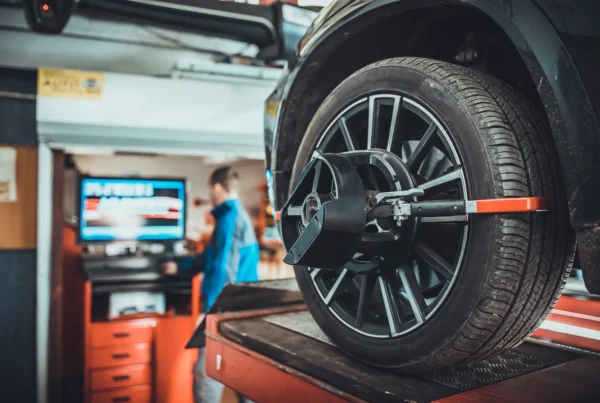
If the wear and vehicle condition point toward alignment, the shop measures wheel angles and compares them with the vehicle manufacturer’s specifications. An out-of-spec reading helps identify what needs correction. A reading within specification sends the investigation back to other possible causes. At Norris Tire & Auto Center, tire inspection, balancing, and wheel alignment are listed services, so these checks fit the shop’s tire work.
Will the unevenly worn tire need replacing?
That depends on the tread left in the most worn area and the tire’s overall condition. An alignment does not rebuild a thin shoulder or erase feathering. The shop can inspect the tire and explain whether it is suitable to keep using, whether rotation makes sense after the cause is addressed, or whether replacement is the better choice. Rotation moves tires to different positions and may help distribute future wear, but it cannot restore missing tread. Norris can give you a current quote if the inspection points to replacement. Ask what the shop found in the thinnest part of the tread and which condition it believes caused the wear. Those findings help explain why an alignment, another repair, or a new tire is being recommended.
If replacement is recommended, the number of tires needed depends on the vehicle and the remaining tread on the others; the site’s guide to how many tires to replace explains that decision. The inspection should establish whether wheel angles caused the wear, whether another issue needs correction, and whether the worn tire still has usable tread.