Your odometer is the wrong instrument for this decision.
Oil does not wear out by distance. It wears out by heat cycles, by hours of running time, and by how much fuel and moisture end up diluting it. Two cars can both tick over 6,000 miles and arrive here in completely different shape, depending on whether those miles were steady runs down I-57 or five-minute hops across town.
That gap is why the number on your windshield sticker so often has nothing to do with your engine. We’ve been servicing cars in Champaign for over 40 years, and what we see is that most people change their oil more often than they need to, while a smaller group waits far too long. Both cost you money.
Here’s how to tell which group you’re in, starting with the driving itself rather than the mileage.
Why Champaign-Urbana Driving Shortens the Interval
Here’s the part the mileage number on the sticker doesn’t account for. Those manufacturer intervals assume a fairly gentle life: steady highway miles, moderate temperatures, an engine that gets fully warm and stays there. That’s not how most cars in Champaign, Urbana, Savoy, and Mahomet are actually driven.
Short Trips Are Harder on Oil Than Long Ones
This surprises people. A ten-minute drive is tougher on your oil than an hour on I-57.
When an engine starts cold, a small amount of fuel and water vapor gets past the piston rings and into the oil. Once the engine reaches full operating temperature and stays there for fifteen or twenty minutes, that moisture cooks off. On a short trip, it never does. It stays in the oil, where water and fuel dilute it and, over time, help form sludge and acids that wear on bearings.
If your daily driving is a five-minute run to a school on the west side of Champaign, a stop at the store on Country Fair Drive, and back home, your engine may rarely get fully warm. That’s the hardest possible duty cycle for oil, even though the odometer barely moves.
Stop-and-Go Miles Count Double
Idling and crawling are also rough on oil. Sitting on Neil Street or working through the lights along Prospect Avenue, your engine keeps running and generating heat while the odometer barely turns. Oil ages by heat cycles and hours, not just by distance. Twenty minutes of stop-and-go traffic ages your oil more than twenty minutes at a steady 65.
Add campus traffic on a fall Saturday, or the two weeks in August when everyone moves back in at once, and a lot of Champaign-Urbana drivers are running a much harder pattern than the manual’s ideal. Those short, hot, stop-and-go city miles are hard on more than the oil. It’s the same driving that wears brake pads faster.
Illinois Winters and Summers Both Take a Toll
Central Illinois hands your engine both extremes. In January, a cold start at five degrees means thick oil that takes longer to reach the top of the engine, which is when most engine wear happens. Winter also means more short trips, more idling to defrost, and more of that moisture problem, because the engine takes much longer to warm up. Fresh oil belongs on the same list as the rest of your cold-weather prep.
Then July arrives with heat and humidity. High ambient temperatures mean higher oil temperatures, and heat is what breaks oil down. If you tow a boat to Clinton Lake or haul a trailer down to Homer Lake, add more heat on top of that.
Full synthetic handles both ends of that range better than conventional does. It’s one of the reasons a synthetic oil change is what we recommend for most vehicles that see a real Illinois year.
Why the 3,000-Mile Number Won’t Die
The 3,000-mile oil change was good advice once. In the 1970s and 1980s, engine oil was a simpler product, engines ran dirtier, and oil filters were less effective. Oil broke down and got contaminated fast, so changing it three or four times a year made sense.
Two things changed since then. Oil got a lot better, and engines got tighter and cleaner. Modern motor oil holds up under heat far longer, carries detergents that keep sludge from forming, and resists thinning out the way older oil did. A quart of oil you buy today has almost nothing in common with a quart from 1985 beyond the name.
So why does the 3,000-mile number stick around? Partly habit, passed down from a parent or a first mechanic. Partly because quick-lube shops built a business model on it. If you get your oil changed every 3,000 miles instead of every 6,000, that’s twice the visits, and the windshield sticker keeps you on schedule. We won’t pretend that isn’t good for a shop’s revenue. It just isn’t good for yours.
What Over-Servicing Actually Costs You
Say you drive 12,000 miles a year, which is close to average. At 3,000-mile intervals, that’s four oil changes. At 6,000, it’s two. Over ten years, you’ve paid for twenty extra services you didn’t need, plus the used oil that came with them. Nobody’s engine is grateful for it.
We’d rather tell you that up front than sell you a service on a schedule that’s forty years out of date.
Conventional vs. Synthetic: How Often to Change Oil by Type
Most of the confusion around how often to change oil comes down to not knowing which kind of oil is in the engine. There are three types you’ll run into.
- Conventional oil. Refined from crude, the traditional product. It works fine in older engines and simple designs, but it breaks down sooner under high heat. Typical interval: 3,000 to 5,000 miles.
- Synthetic blend. A mix of conventional and synthetic. A middle option, usually a small step up in price and a real step up in durability. Typical interval: 5,000 to 7,500 miles.
- Full synthetic. Built in a lab so the molecules are uniform in size and shape. It flows better when cold, holds up better when hot, and resists breaking down the longest. Typical interval: 7,500 to 10,000 miles, and some manufacturers specify more.
A full synthetic oil change costs more per visit. It also usually costs less per mile, because you’re doing fewer of them. And if your vehicle was built in the last decade or so, you may not have a choice. Many manufacturers require full synthetic, especially on turbocharged engines, and using conventional oil where synthetic is specified can affect your warranty.
How to Tell What Your Engine Takes
Look in the owner’s manual, or at the oil cap under the hood. You’re looking for a viscosity grade like 0W-20, 5W-20, or 5W-30, and often a note that synthetic is required. If you can’t find it, we can look it up by your VIN in about a minute. Don’t guess, and don’t assume the last shop used what the manufacturer specified.
The Severe Service Schedule Nobody Reads
Open your owner’s manual to the maintenance section and you’ll usually find two schedules. One is normal service. The other is called severe service, or sometimes special operating conditions.
Severe service isn’t about abusing your vehicle. It’s a specific list, and it usually includes:
- Frequent short trips, often defined as under five or ten miles
- Extended idling or long stretches of stop-and-go traffic
- Driving in very cold or very hot temperatures
- Towing, hauling, or carrying heavy loads
- Dusty or gravel roads, which is a real one on the rural routes around Champaign County
- Mostly city driving rather than highway
Read that list honestly and most Champaign drivers qualify for at least two items. A short commute across town in February checks three by itself.
The severe schedule typically cuts the oil change interval by 25 to 50 percent. So a vehicle rated for 10,000 miles on synthetic under normal conditions might want service at 6,000 or 7,500. That isn’t a shop upselling you. It’s the manufacturer’s own recommendation for the way you actually drive.
What About the Oil Life Monitor?
Newer vehicles have an oil life monitoring system, and the good ones are genuinely useful. They don’t just count miles. They track engine temperature, cold starts, run time, load, and rpm, then estimate how much life the oil has left. That’s a better measure than distance alone.
Two cautions. First, the system has to be reset correctly after every oil change, and it doesn’t get reset every time. If the percentage looks strange, it may be tracking from the wrong starting point. Second, an oil life monitor doesn’t know if the oil level is low or if there’s a leak. It estimates condition, not quantity. You still want eyes on the dipstick.
So How Often Should You Change Your Oil? Our Honest Answer
For most drivers in and around Champaign, here’s where we land:
- Conventional oil: every 3,000 to 4,000 miles, or every 4 to 6 months
- Synthetic blend: every 5,000 miles, or every 6 months
- Full synthetic: every 6,000 to 7,500 miles, or once a year at minimum
Notice the time limits. Oil ages sitting still. It absorbs moisture, and additives settle and lose effectiveness. If you drive 4,000 miles a year, you still want fresh oil annually. That applies to a second car, a weekend truck, or a vehicle that mostly sits.
Start with what your manufacturer specifies for your engine, then shorten it if your driving matches the severe service list. That’s a real answer for your car, not a number somebody’s uncle repeated at a cookout.
How to Tell Your Car Is Overdue
Your vehicle will usually tell you before anything gets expensive. Watch for these:
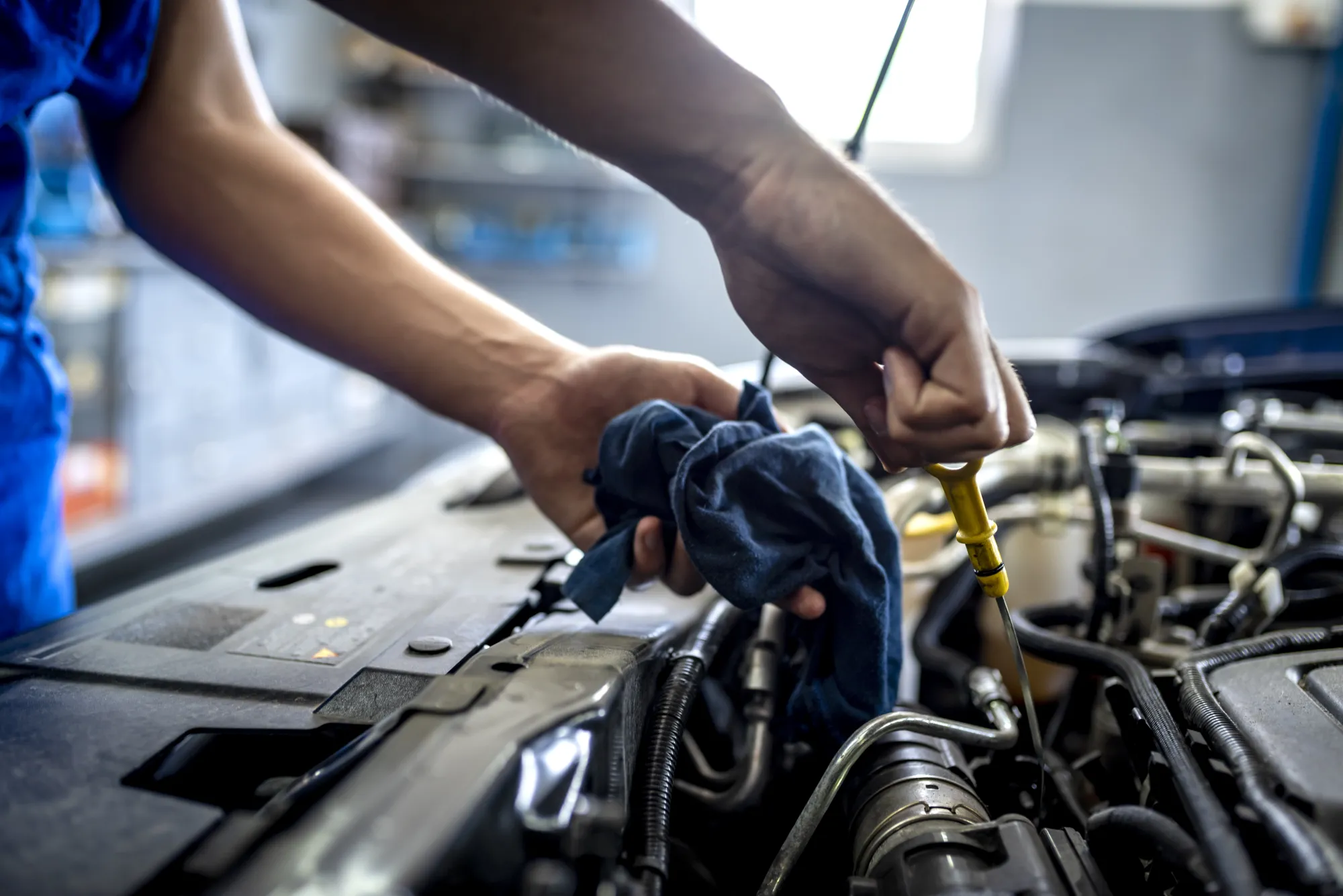
- The oil is black and gritty. Pull the dipstick. Fresh oil is amber and translucent. Oil that’s dark brown or black and feels gritty between your fingers is past its useful life.
- The level is low. If you’re topping off between changes, the engine is either burning or leaking oil. Both are worth looking at. Low oil is far more damaging than old oil.
- A ticking or tapping noise on startup. Especially in cold weather. That’s often oil that’s too thick or too depleted to reach the valvetrain quickly.
- The engine runs hotter than it used to. Oil carries away a real share of engine heat. Degraded oil carries away less.
- The oil change light or wrench icon is on. That’s a maintenance reminder and it means service is due.
- The oil pressure light comes on. This one is different. Stop driving and shut the engine off. Low oil pressure can destroy an engine in minutes, and it’s the one warning you should never drive on.
- You can’t remember the last one. No sticker, no receipt, no idea. Assume it’s due.
None of these are things to wait out. An oil change is one of the least expensive services on your vehicle, and a worn engine is one of the most expensive repairs.
The same goes for the light nobody wants to see. If a check engine light is what brought you here, this is what it actually means and when to worry.
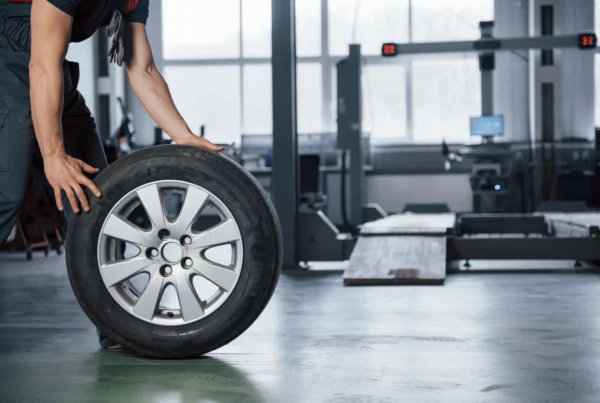
Having the car up on the lift is also the easiest time to catch tire wear, so we look at tread depth and wear pattern at every service. That’s why regular tire rotations pair well with an oil change visit.
Oil Change in Champaign, IL: Come See Us
If you’re searching for an oil change in Champaign, IL, we’re at 702 N Country Fair Drive, and we’ve been taking care of Champaign-Urbana drivers for more than 40 years. When you come in for an oil change, we use the oil your manufacturer specifies, we look at how you actually drive, and we tell you when you’ll genuinely need the next one. If that’s 7,500 miles out, we’ll say 7,500 miles.
We also check the things that are easy to see while your car is already on the lift: fluid levels, belts and hoses, tire condition and wear pattern, and anything starting to leak. If something needs attention, we’ll show you and explain it. If it doesn’t, we’ll tell you that too. We don’t sell you things you don’t need, and after four decades in this town, our reputation depends on that.
Commuters running across town, families in Savoy with three cars in the driveway, local businesses in Urbana with vehicles that can’t afford downtime: for all of them, the right oil change interval is the cheapest engine insurance there is.
Due for service, or just not sure where you stand? Schedule an appointment at our Champaign shop and we’ll get you sorted out.